A three-reel machine built in the 1980s had roughly a thousand possible outcomes per spin. A modern five-reel video slot running on a certified random number generator can produce outcomes numbering in the tens of millions. That single mathematical shift explains almost everything about how the industry has changed - why jackpots grow larger, why bonus rounds have multiplied, and why the distance between a casual free spin and a real-money payout has become both wider and easier to cross at the same time.
Anyone who has browsed a casino lobby knows the sensation of choice fatigue: hundreds of titles, each promising something different - cascading reels, sticky wilds, progressive multipliers. Before committing actual funds, many players test mechanics through a promotional round, and titles built around escalating multipliers have become particularly popular for this kind of preview; a spin through this link shows how a single session can combine free rounds with a real cash structure underneath. Understanding that structure - not just the visuals on the reels - is what separates a player who manages their bankroll from one who burns through it in ten minutes.
This piece breaks down how online slot games actually work beneath the surface, what separates a fair jackpot from a marketing gimmick, and how to read the fine print on bonuses before they cost you more than they give.
How Real Money Slots Actually Work
Every legitimate slot machine, digital or physical, runs on a random number generator (RNG) that determines the outcome of a spin before the reels even finish animating. The visual spin is theater; the mathematical result happens instantly. This distinction matters because it explains why no amount of timing, reel-watching, or button-tapping rhythm changes your odds. The RNG doesn't remember your last ten losses, and it has no concept of a machine being "due" for a win.
Random Number Generators and Fairness
Licensed operators submit their RNG software to independent testing labs that verify statistical fairness before a game goes live. This certification process is why regulated real money slots differ meaningfully from unlicensed or gray-market alternatives - the math has been audited, and the payout behavior matches what the paytable claims over millions of simulated spins.
Return to Player (RTP) Explained
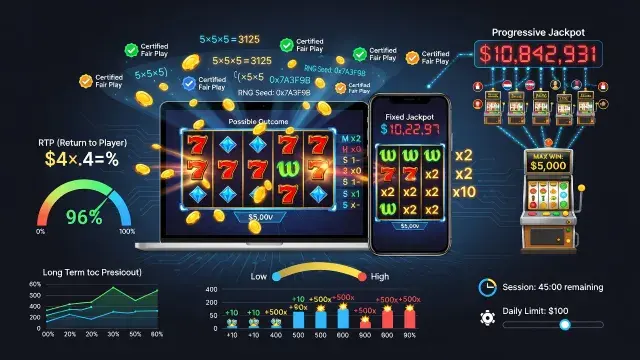
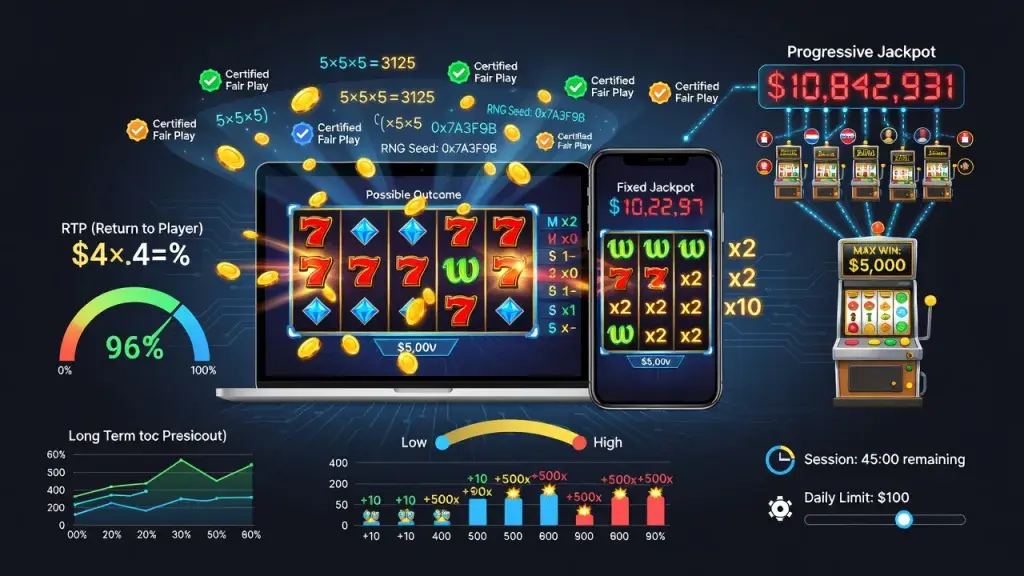
RTP is the theoretical percentage of wagered money a slot returns to players over an extended period, often expressed as a figure in the mid-to-high 90s. An RTP of 96%, for instance, means that over a very large sample of spins, the game returns 96 cents for every dollar wagered, with the remaining 4% representing the house edge. This is a long-run statistical average, not a promise for any individual session - a player can lose steadily on a 97% RTP machine for hours and still be operating exactly as the math intends.
Volatility and Bankroll Behavior
Volatility (sometimes called variance) describes how a slot distributes its payouts. Low-volatility games pay smaller amounts frequently; high-volatility games pay rarely but can deliver large multipliers when they hit. Matching volatility to bankroll size is arguably more important than chasing the highest RTP figure, since a high-volatility slot can deplete a small bankroll before it ever reaches a big win.
Understanding Jackpot Slot Machines
Jackpot slot machines fall into distinct categories, and conflating them leads to unrealistic expectations. A fixed jackpot pays a set amount regardless of how many people are playing. A progressive jackpot, by contrast, grows with every wager placed across a network of linked machines until someone hits the triggering combination.
Fixed vs. Progressive Jackpots
Fixed jackpots tend to have far better realistic odds of landing because the payout ceiling is capped and the underlying RTP is usually more generous. Progressive jackpots sacrifice frequency for scale - the eye-catching seven- or eight-figure prizes advertised in a lobby are almost always tied to a progressive network rather than a standalone machine.
Networked and Local Progressives
Some progressives are local to a single casino platform; others are networked across multiple operators simultaneously, which is how jackpots can climb into extraordinary sums within weeks. The tradeoff is mathematical: a networked progressive typically diverts a larger slice of every wager into the jackpot pool, which can slightly lower the base game's RTP.
Reading Jackpot Odds Honestly
Reputable developers publish theoretical hit-frequency data for their jackpot features, though it's often buried in help screens rather than headline marketing. A jackpot with a one-in-ten-million trigger chance is not a flaw - it's the mechanism that allows the prize pool to reach the size that made the game attractive in the first place.
The Role of Free Slot Games
Free slot games serve a functional purpose beyond entertainment: they let players evaluate a title's pacing, bonus frequency, and visual style without financial exposure. Nearly every developer that releases a real-money title also offers a demo version running on virtual credits, using identical RTP and volatility settings.
Demo Mode vs. Real Play
Because demo mode uses the same certified math engine as the cash version, it's a legitimate way to judge whether a slot's bonus round triggers often enough to hold your interest - without the emotional pressure that real stakes introduce. The one thing demo play cannot replicate is the psychological weight of an actual loss, which is why session behavior often differs sharply between the two modes.
Free Play as a Bankroll Strategy Tool
Experienced players use free slot games to map out a title's variance before wagering: how often small wins appear, how the bonus feature behaves, whether multipliers stack or reset. This groundwork turns a real-money session into an informed decision rather than a guess.
Decoding Slot Machine Bonuses
Bonus structures are where the marketing gap between "advertised value" and "practical value" widens the most. A welcome offer of free spins or matched deposit funds sounds straightforward, but the terms attached determine whether it's genuinely useful.
Welcome Bonuses and Wagering Requirements
A wagering requirement dictates how many times bonus funds must be played through before withdrawal becomes possible - commonly in the range of 20 to 40 times the bonus amount. A generous-looking bonus with a steep wagering requirement can end up being less valuable than a smaller bonus with lenient terms.
Free Spin Mechanics and Win Caps
Free spins awarded as part of a promotion are frequently capped in how much they can convert into withdrawable cash, and they're often restricted to specific slot titles rather than usable across an entire catalog. Reading which games qualify matters as much as the spin count itself.
In-Game Bonus Rounds vs. Promotional Bonuses
It's worth separating promotional bonuses (offered by the operator) from in-game bonus features (built into the slot's own design, like free spin rounds triggered by scatter symbols). The latter directly affects volatility and payout behavior, while the former is a marketing layer sitting on top of the game.
- Sticky wilds that remain in place across multiple free spins
- Multiplier trails that increase with consecutive wins
- Pick-a-prize bonus screens with fixed cash values
- Cascading or "tumbling" reels that chain wins within a single spin
Choosing Between Free Play and Real Money Sessions
The decision to move from free slot games into real money slots should be deliberate, not impulsive. A player who understands a game's rhythm from demo sessions enters real play with realistic expectations about how long a losing streak might last before a bonus round appears.
Signals a Game Is Worth Real Wagers
Consistent bonus frequency, a clear paytable, and transparent RTP disclosure are the three signals worth checking before committing funds. If a title hides its RTP or bonus mechanics behind vague descriptions, that opacity itself is a warning sign.
Setting Limits Before You Start
Deciding a session's maximum loss and target win before the first spin - and sticking to both numbers - remains the single most effective discipline in slot play, regardless of how favorable a machine's math looks on paper.
Frequently Asked Questions
Can a slot machine be "hot" or "cold" based on recent spins?
No. Each spin is generated independently by the RNG, with no memory of prior outcomes. A machine that just paid a jackpot has exactly the same odds on its next spin as one that hasn't paid out in hours.
Do higher RTP slots always mean better returns for me personally?
Not necessarily in the short term. RTP is a long-run average across millions of spins, so a single session on a high-RTP slot can still lose money while a low-RTP slot delivers a lucky win. RTP is useful for comparing games, not predicting individual sessions.
Why do progressive jackpots sometimes reset to a lower "seed" amount?
Once a progressive jackpot is won, it typically drops back to a predetermined seed value and begins climbing again from every subsequent wager placed. This reset is built into the game's design and doesn't indicate anything about future odds.
Are free spins from a bonus the same as free slot games?
No, they're different mechanisms. Free slot games are demo versions played with virtual credits and no cash value. Free spins from a bonus are real spins on a real-money game, and any winnings from them are usually subject to wagering requirements before withdrawal.
What should I check before trusting a slot's advertised jackpot size?
Confirm whether the jackpot is progressive or fixed, check if it's networked across multiple casinos, and look for the game's published hit-frequency or odds information, usually available in the help or information section of the game interface.
Does playing longer increase my chances of hitting a bonus round?
Longer play increases the number of opportunities for a bonus trigger to occur, since each spin carries an independent chance, but it does not change the underlying probability of any single spin. More spins mean more attempts, not better odds per attempt.